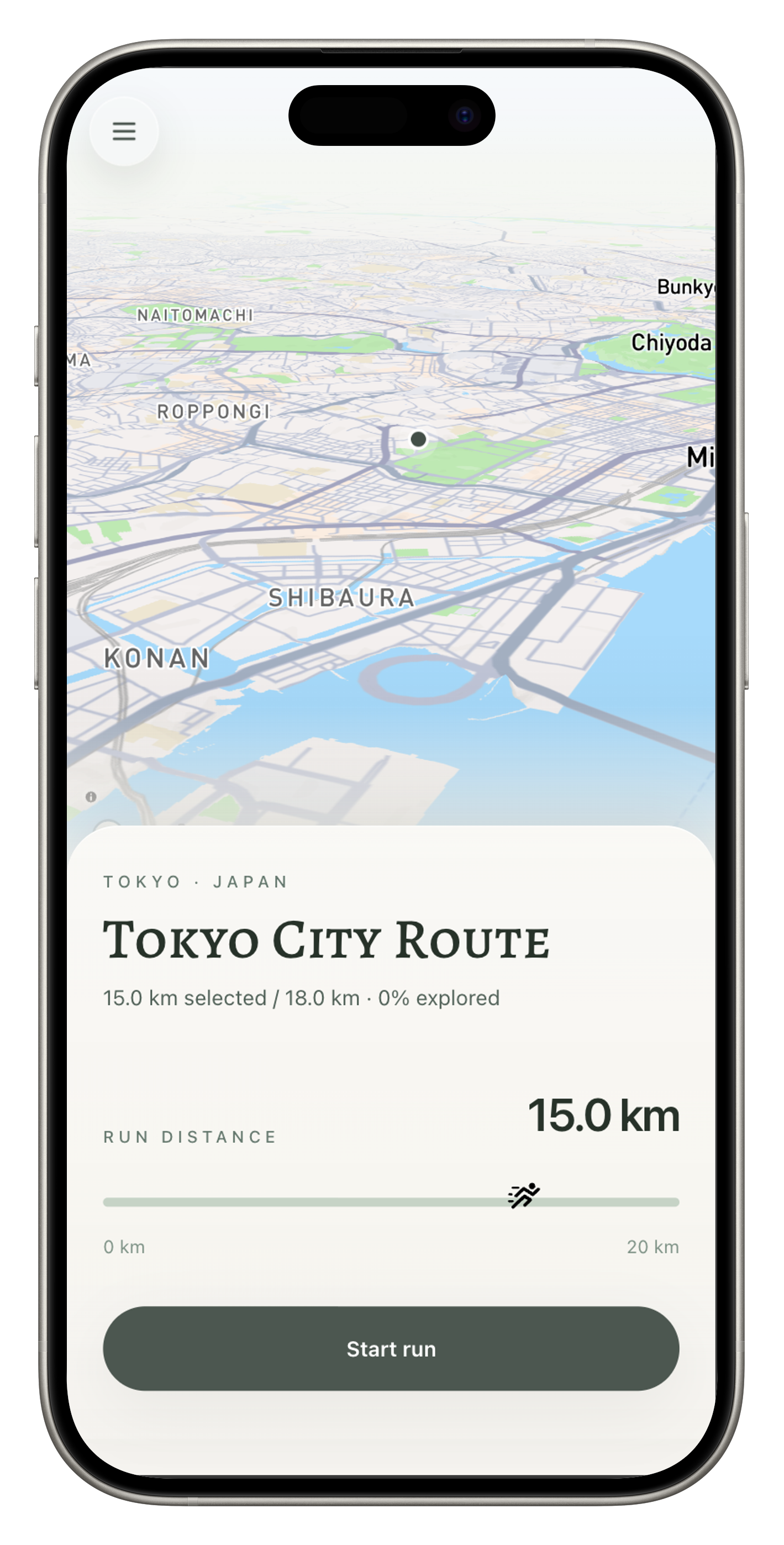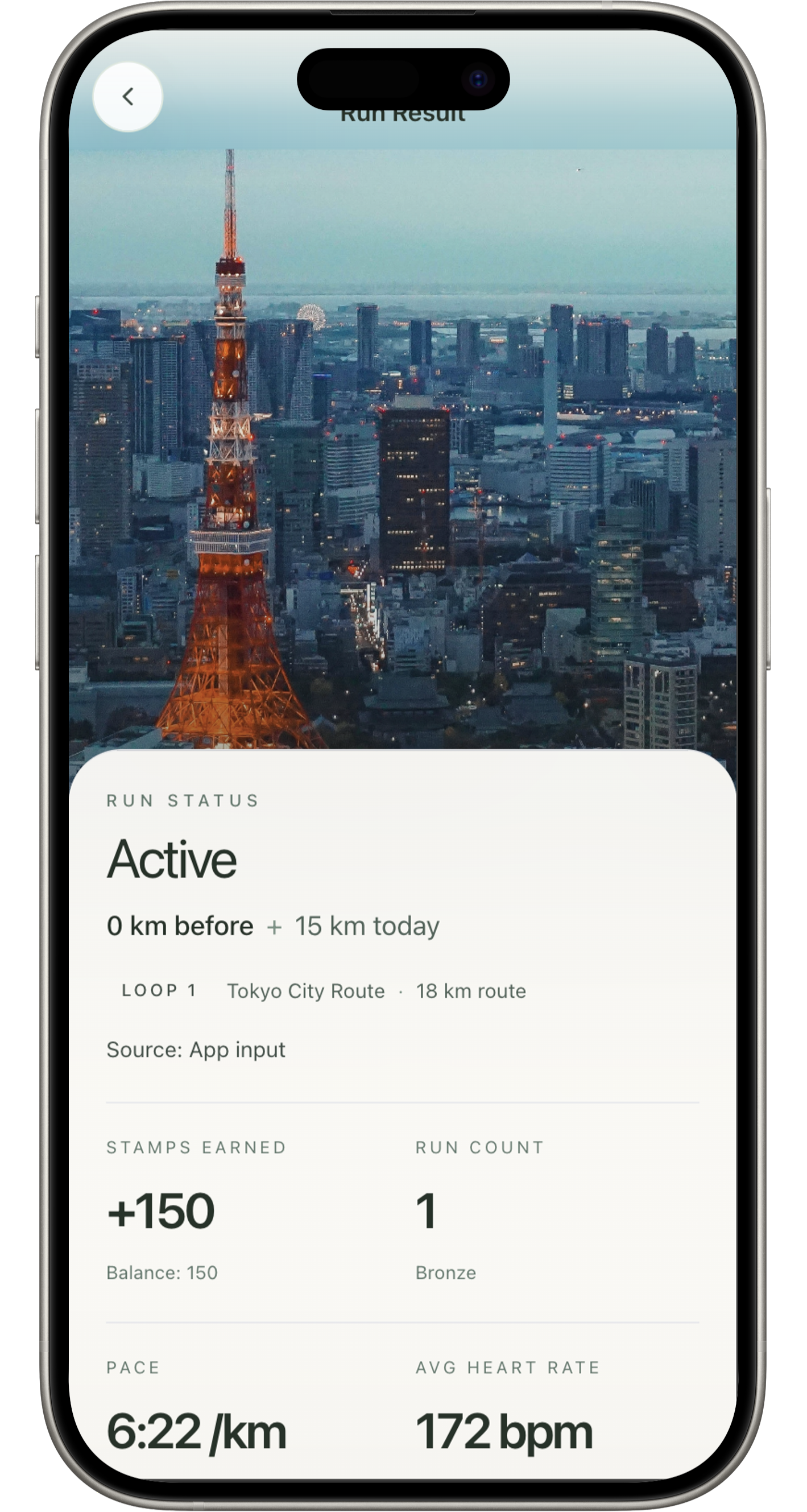


Redefining the Minimalist Running Experience.
Team members and key responsibilities
Why MileScape is needed
In their daily exercise routines, runners require an app to help them plan their training schedules and provide support during workouts, driven by a desire for self-discipline and the ability to track their progress.
Existing fitness apps merely quantify running in terms of distance and duration, providing feedback in the form of figures such as calories burned or weekly summaries [1]. While such self-monitoring features are useful for basic activity tracking, they struggle to address the repetitive nature of running itself, making it difficult to maintain long-term motivation.
Research indicates that up to 42% of users lose interest in fitness trackers within six months [2]. This high attrition rate is partly due to saturation and redundancy in the information provided by fitness apps, as well as a lack of meaningful feedback and a sense of belonging [2][3].
Based on the above issues, our group has identified the following two research questions.
RQ1: How can playful and creative running applications enhance user engagement and sustain long-term interest in running activities?
RQ2: How can human-centered design principles enhance runners’ emotional engagement and overall user experience in running applications?
Positioning MileScape between academic research and existing commercial products
Common Products in the Market
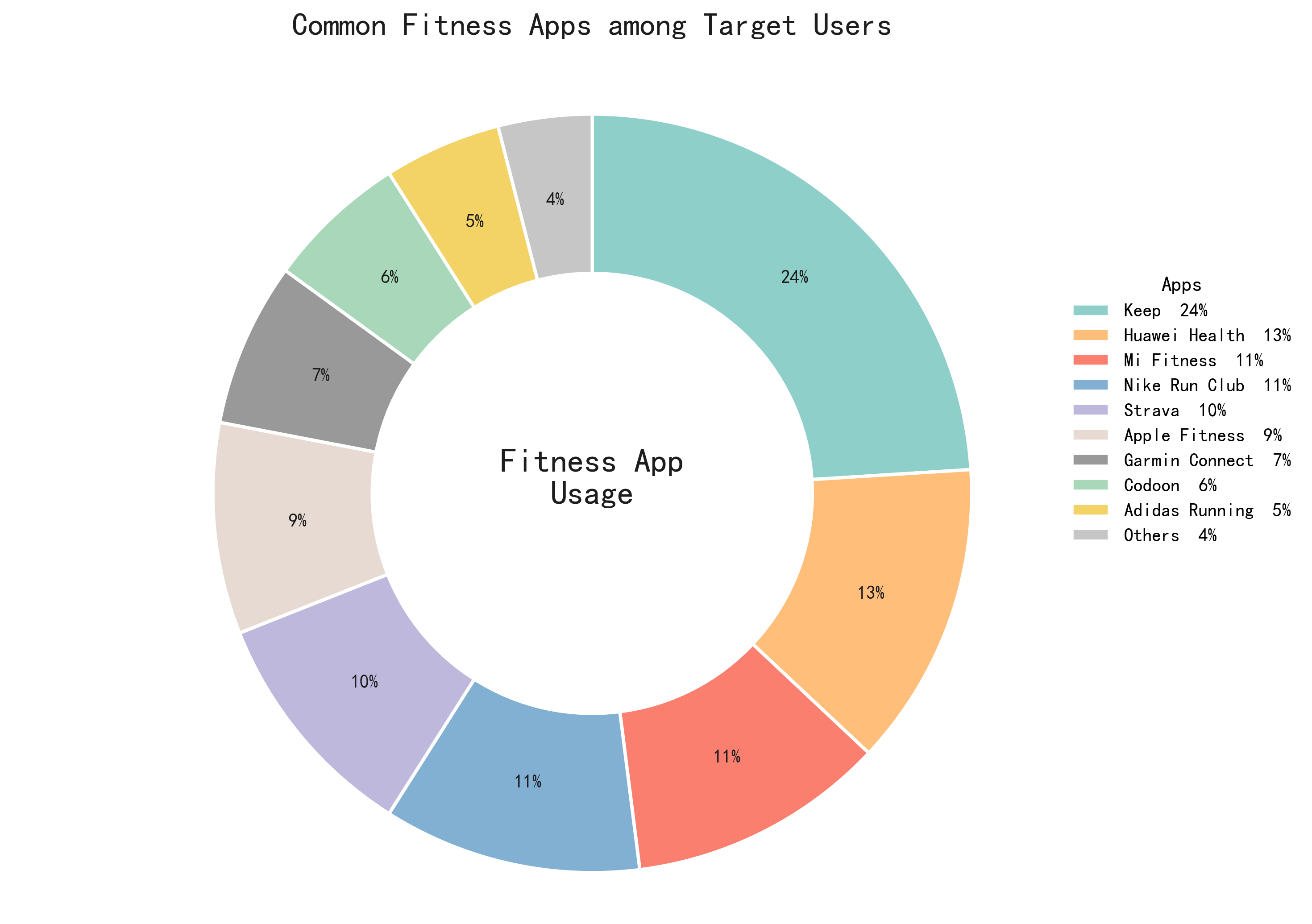
Existing running and fitness applications such as Keep, Nike Run Club, Strava, and Apple Fitness focus heavily on performance tracking and structured training.
Example: Keep 45%
Market Issues (Runner Perspective)
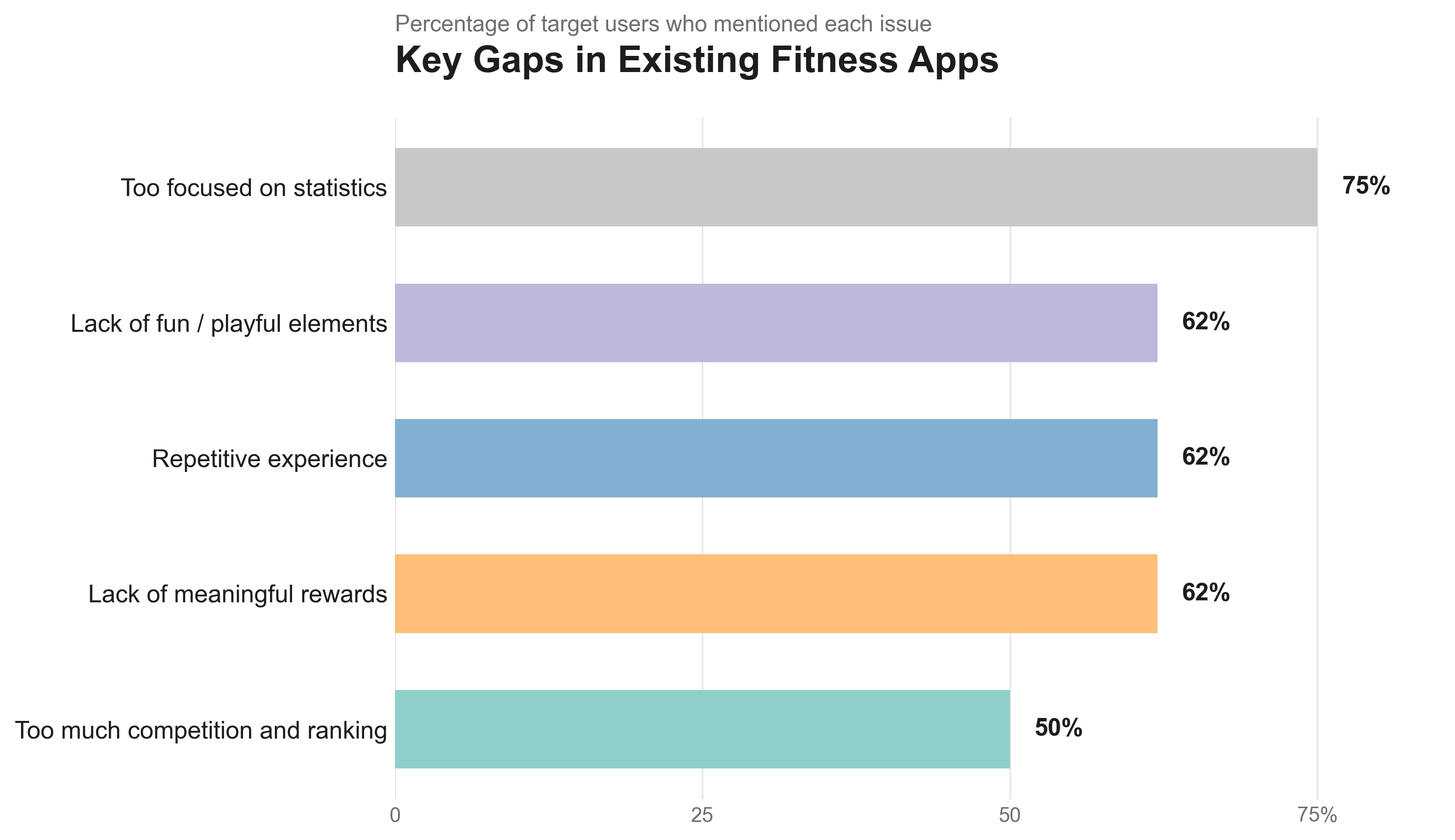
Our group survey revealed that most existing running applications focus excessively on data—such as mileage and calories—while lacking fun and engaging elements.
Many users reported that these systems fail to provide fresh experiences or meaningful rewards, making it difficult to sustain long-term motivation.
Approximately half of the users mentioned that competitive ranking systems introduce stress rather than enjoyment.
Although social features can increase engagement, they often require continuous coordination by organizers and may not suit all users.
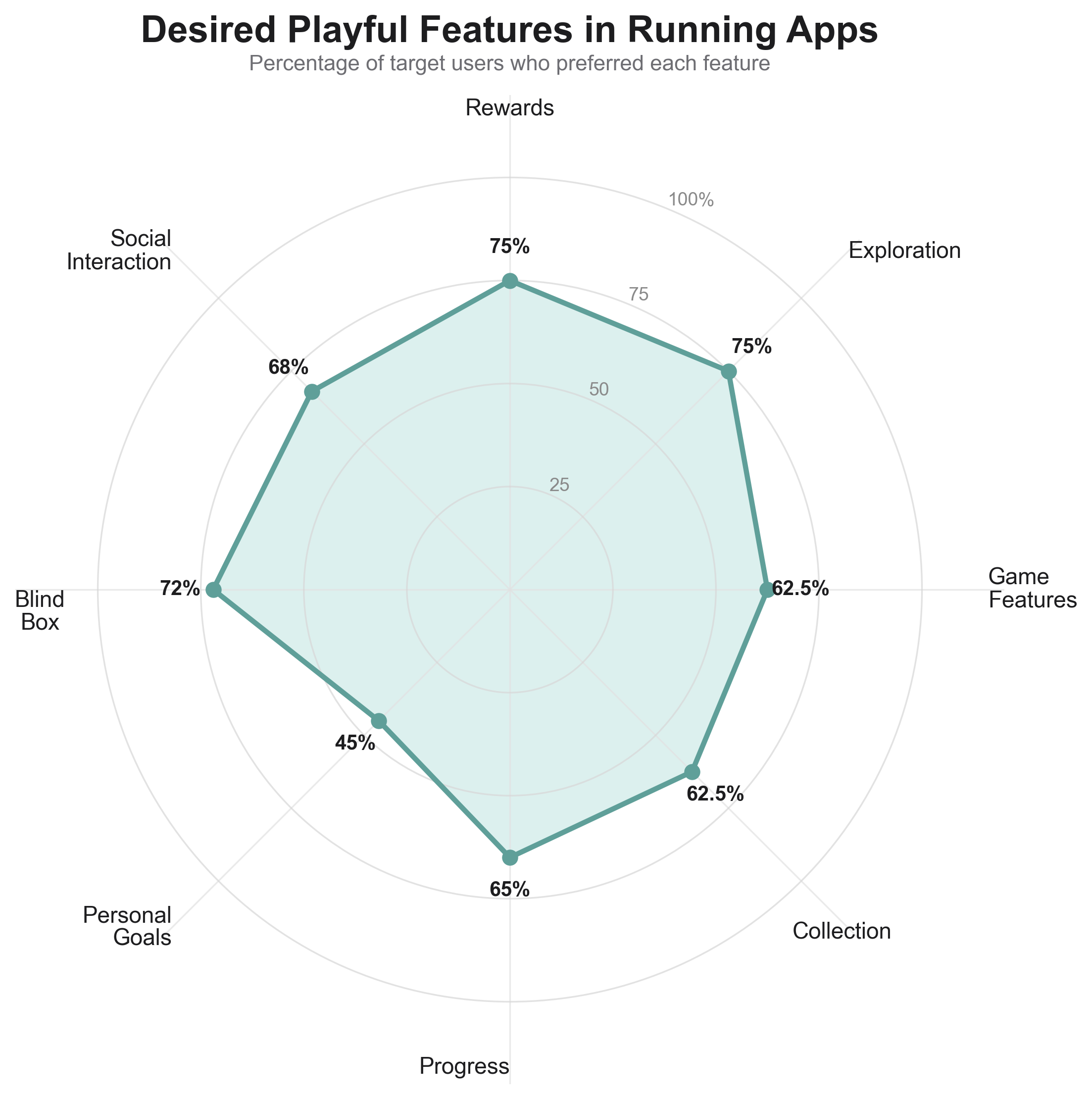
To identify effective incentives, we examined users’ interests beyond running, including gaming and travel.
Users showed strong interest in exploration and collection mechanisms, such as unlocking items and discovering new places.
Therefore, MileScape integrates these two core elements to create a more engaging running experience.
Although blind-box mechanics were considered, they were ultimately rejected due to the difficulty of delivering meaningful surprise and value in a digital environment.
Although organizers represent only 30% of users, they strongly influence participation.
They reported that:
• Runner motivation declines quickly after initial enthusiasm
• Existing apps struggle to retain users
• Group coordination is time-consuming and difficult
These findings suggest the need for systems that reduce reliance on organizers while supporting intrinsic motivation.
Current running apps focus on data tracking and competition, while lacking engagement, fun, and emotional rewards.
There is a clear gap between user expectations and existing solutions.
→ MileScape addresses this gap by combining exploration, collection, and emotional engagement into a unified running experience.
Primary and secondary users identified through research
How MileScape addresses motivation, playfulness, and human-centered running experience
MileScape aims to turn running into a journey, not a task.
To design a playful, human-centered running experience that transforms repetitive physical activity into a meaningful, emotionally engaging journey, thereby improving long-term user motivation and engagement.
Adapt Forest's “accumulate focus → visualize as a tree” mechanism to the running context.
At the same time, consider that most existing apps focus on normative social comparisons (such as leaderboards), which may not suit users with a weaker competitive spirit or those pursuing mastery goals rather than performance goals [4].
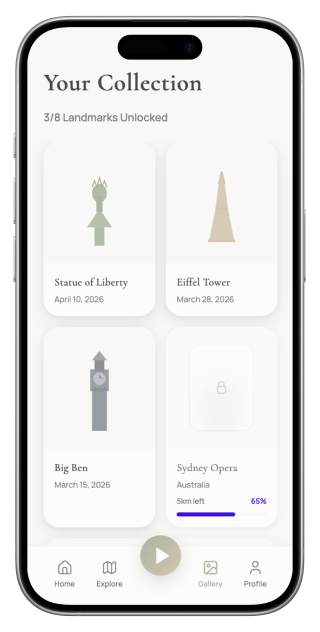
Instead, adopt the concept of “accumulate running miles → collect stamps,” where stamps can be used to unlock collection items—landmarks.
1. RQ1 aims: Enhance Playfulness in Running
• Transform running from a data-driven activity into a goal-oriented exploration experience
• Reduce user drop-off by introducing progressive milestone rewards (landmark unlocking)
2. RQ2 aims: Foster Social and Emotional Connection
• Replace abstract metrics (distance, calories) with visually meaningful progress (global routes and landmark journeys)
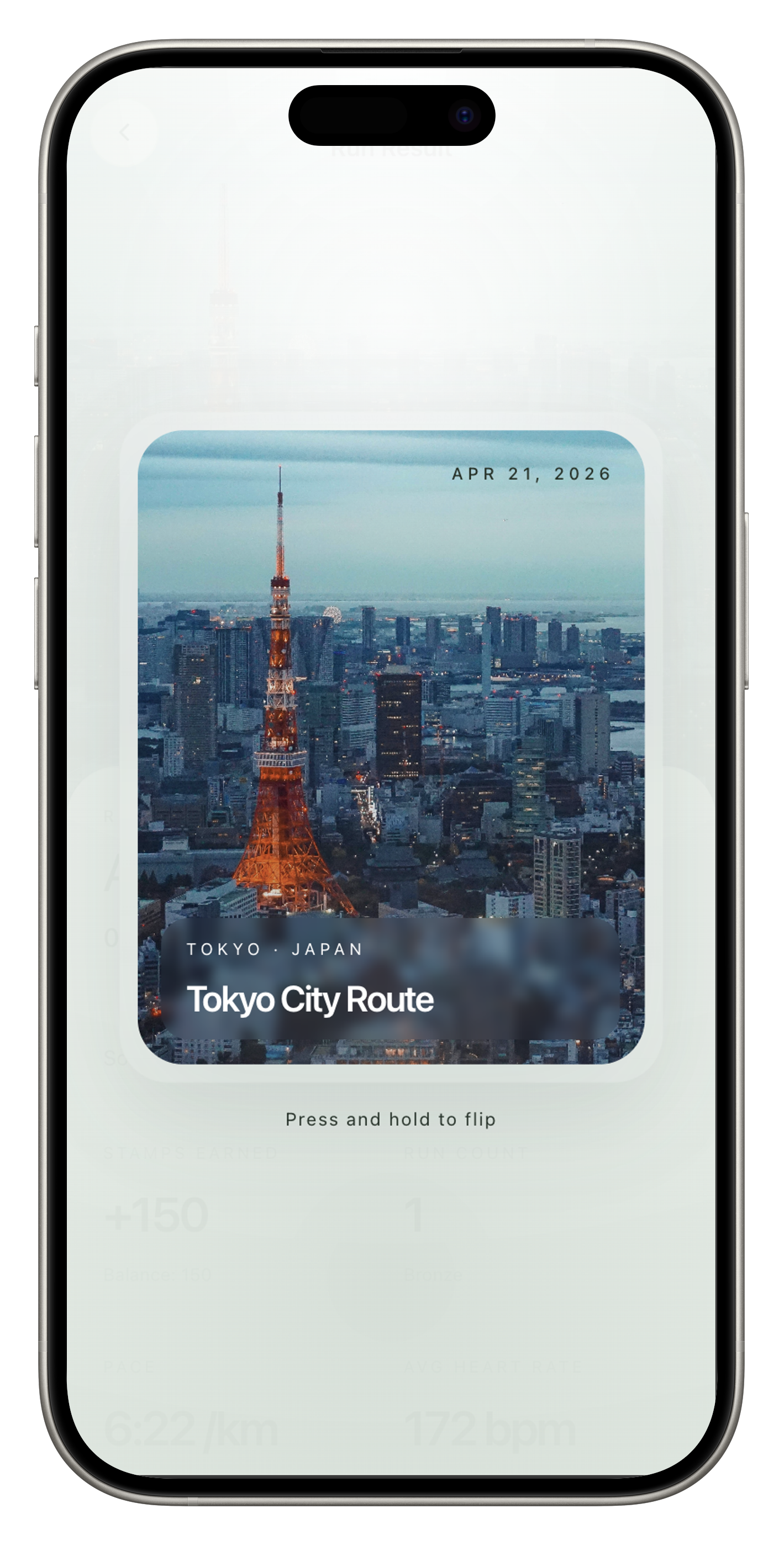
• Provide emotional rewards (e.g., postcard-style landmark unlock moments)
• Enable users to form running groups and participate in shared challenges, fostering a sense of community and belonging
• Allow users to collect and share achievements, enhancing social interaction and long-term attachment to the platform
3. Iterative Minimalist User Experience Design
• Design a clean, distraction-free interface following minimalist principles
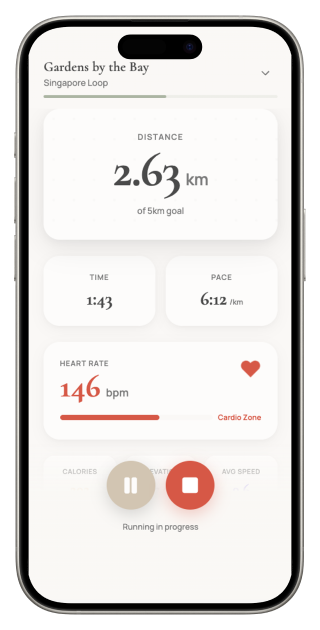
• Develop a wearable interface optimized for glanceability, focusing only on essential information (e.g., distance and heart rate)
• Prioritize simplicity not as a static design choice, but as an iterative process shaped by real user feedback.
1. Replace traditional exercise-data dashboards with an exploration-based map experience. Through Mapbox route previews, destination detail pages, and landmark timelines, the project translates running outcomes into a sense of “moving forward in space.”
2. Replace traditional ranking-based motivation with landmark unlocking.
3. Transform scattered running sessions into long-term route progress.
4. Turn running routes into collectible destinations.
5. Allow users to repeat the same route and earn advanced achievements.
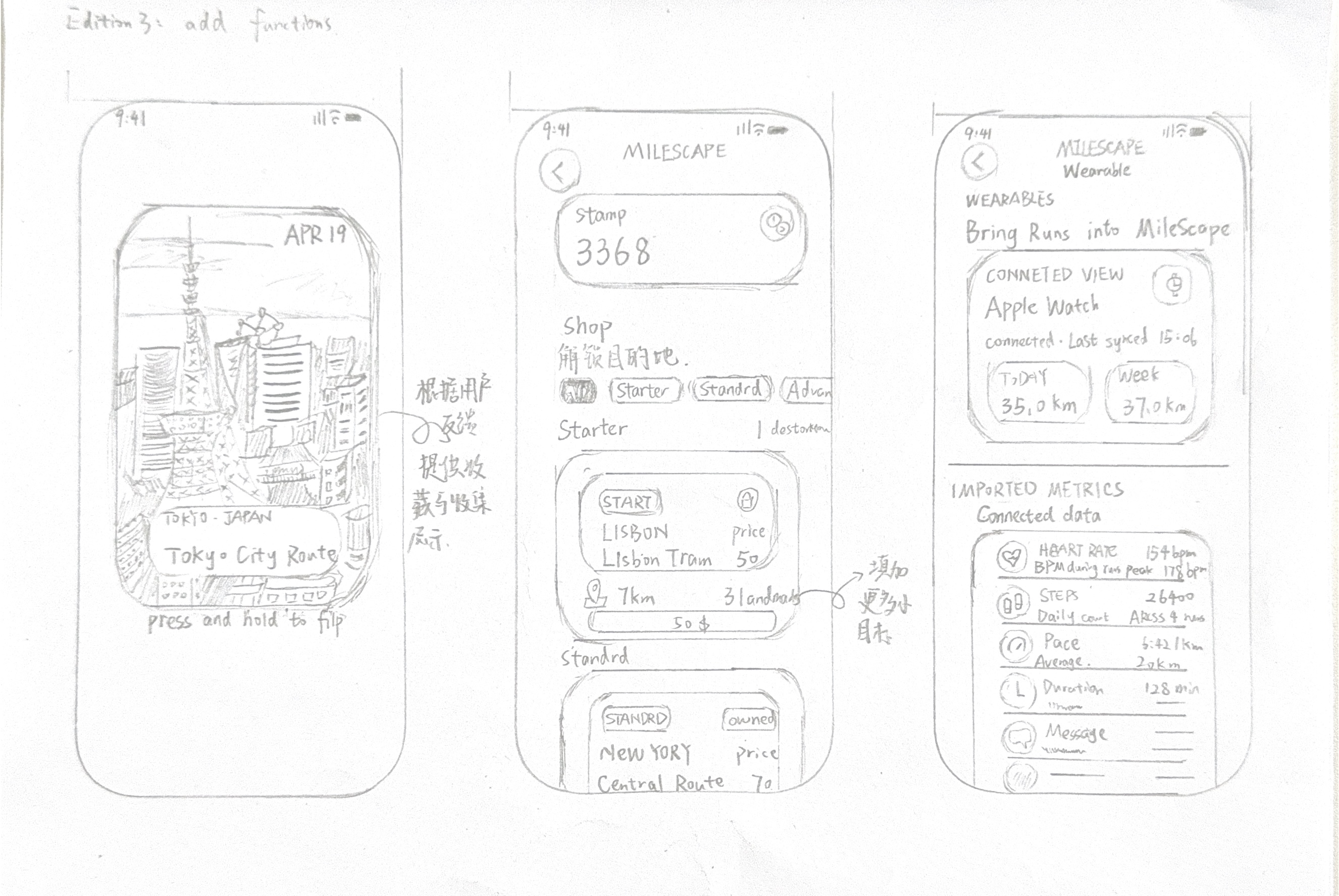
6. Reduce the burden of manual recording through wearable-device integration.
7. Use PaceCrew to shift group running from competition and ranking to collaborative exploration.
8. Directly connect social motivation with content unlocking, creating team-exclusive reward mechanisms.
MileScape has created an attractive and user-centered experience by transforming the repetitive action of running from simple digital tracking into an interactive journey full of exploration and discovery.
Firstly, the system turns running into an exploration-filled journey, guided by landmarks, thereby enhancing the users' intrinsic motivation.
Secondly, MileScape brings emotional value and a sense of belonging to users through meaningful rewards.
Thirdly, the design focuses on creating a sense of belonging and connection. Through features such as "PaceCrew", users can participate in team challenges and strive towards a common goal, thus transforming running from a personal activity into a socially significant one.
Finally, the system adopts a minimalist design style and an iterative design approach to ensure that the interaction operations remain simple and intuitive, while continuously optimizing based on user feedback.
Overall, the MileScape project provides effective solutions for our RQ1 and RQ2.
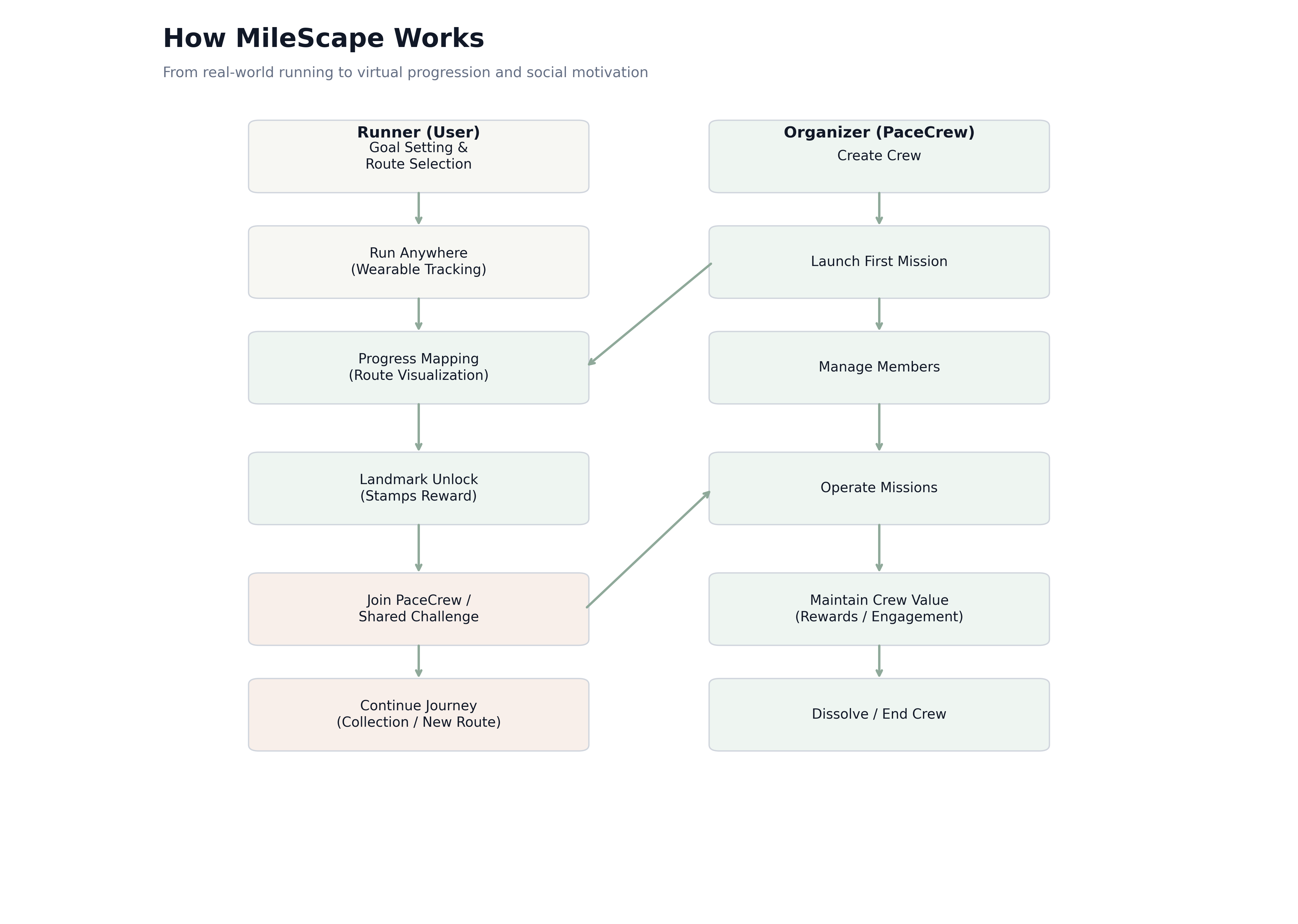
Parallel to the runner journey, this map focuses on how an organizer creates a PaceCrew, launches missions, maintains participation, and closes the group lifecycle responsibly.
Exploration of design ideas and decision-making process
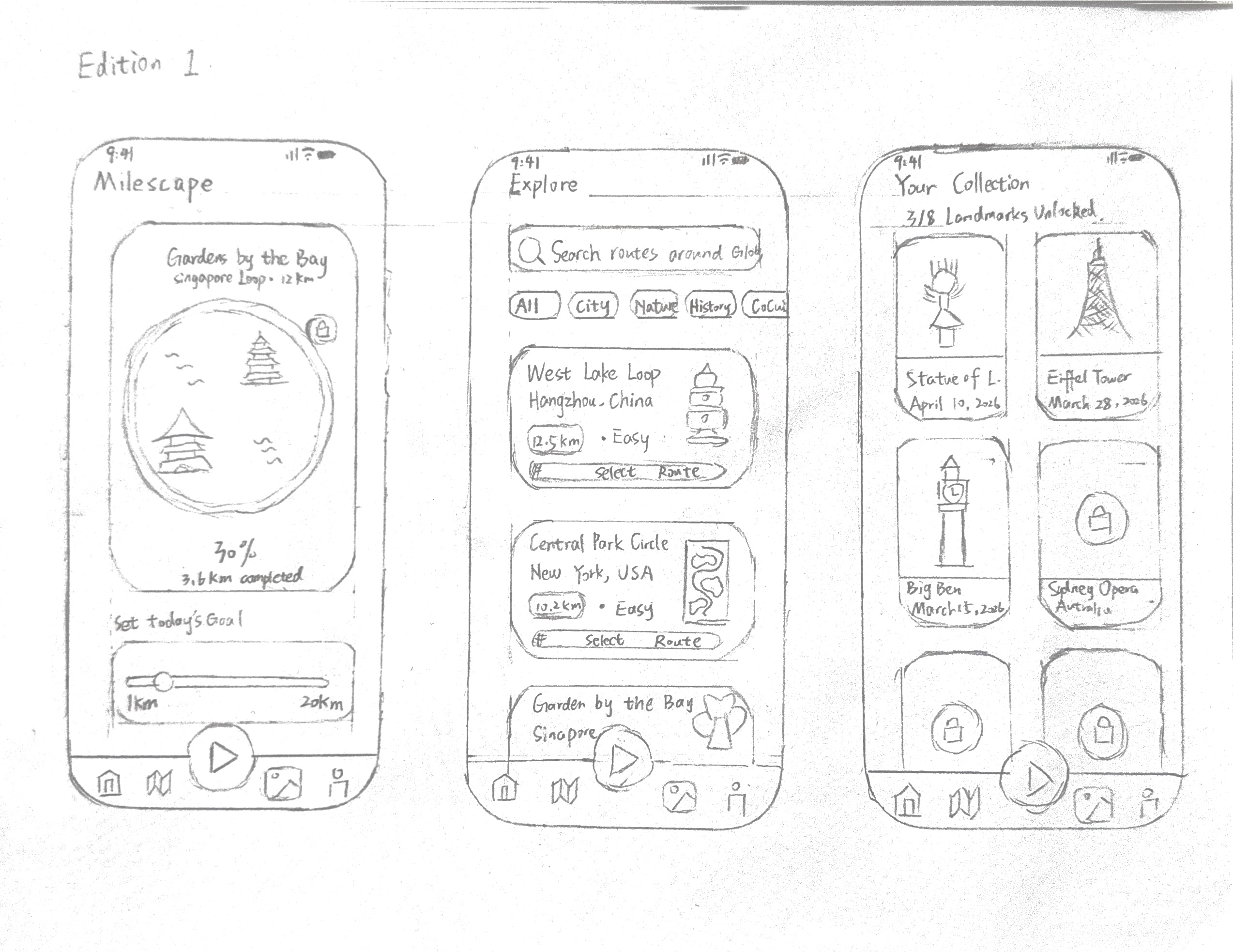
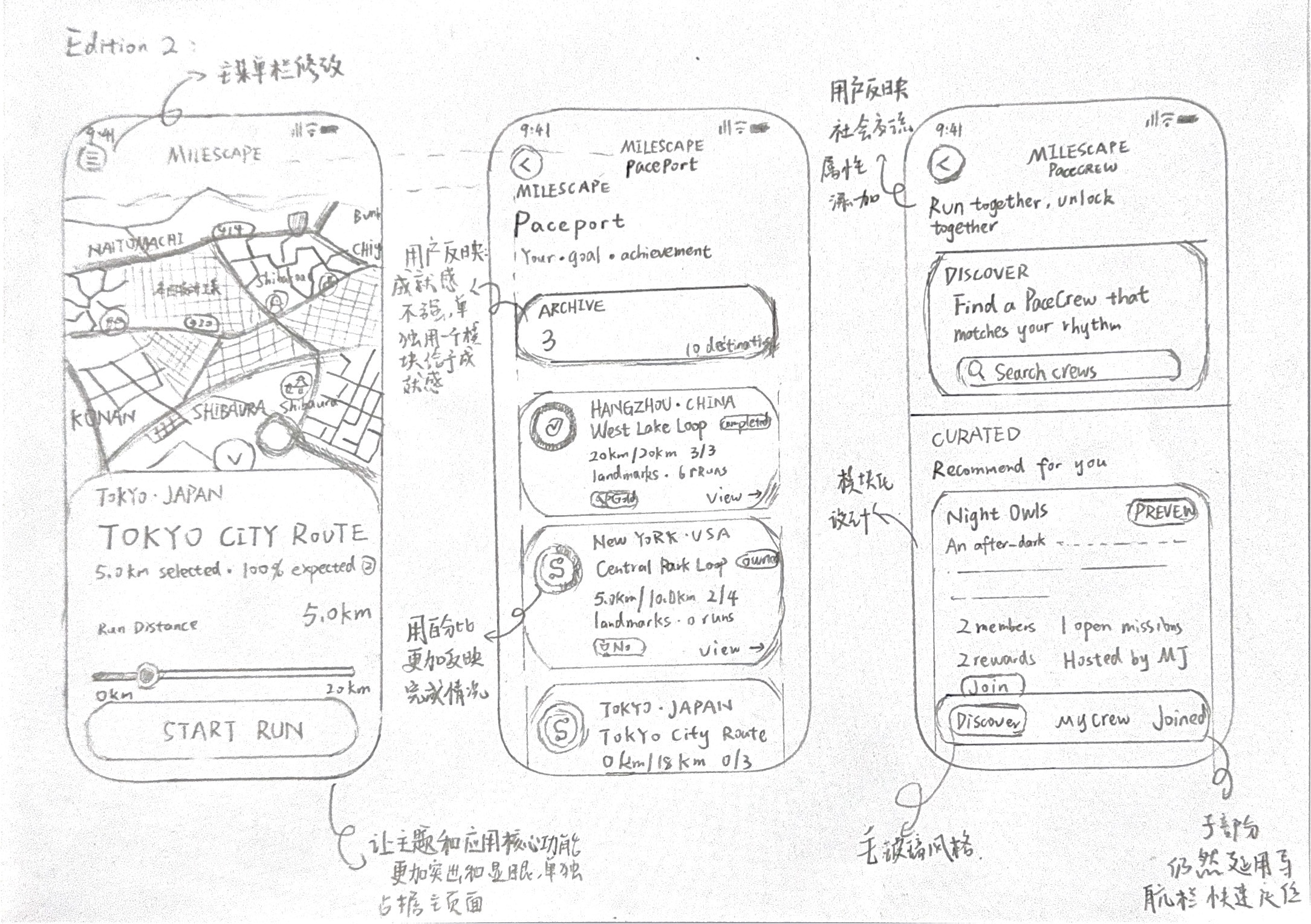
Rapid ideation sketches exploring multiple UI directions and interaction concepts.
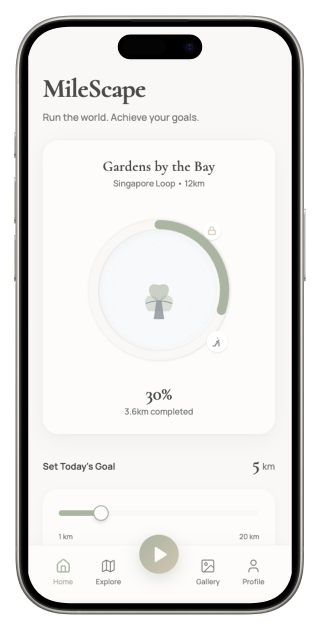
Early wireframes and interaction flows tested through Figma prototype.
System design and development details
Overview of how the web application handles user data, map rendering, and interaction logic.
Interactive high-fidelity prototype screens presented with the same stacked page-flip browsing effect as the Crazy Eights sketches.
| Member | Contribution |
|---|---|
| Shengyang Yin | Algorithm & Backend Development |
| Yize Zheng | UI/UX Design |
| Chenrui Zhu | Mobile & System Integration |
| Qi Chen | Product Strategy & Testing |
How we evaluated MileScape in an early-stage user study
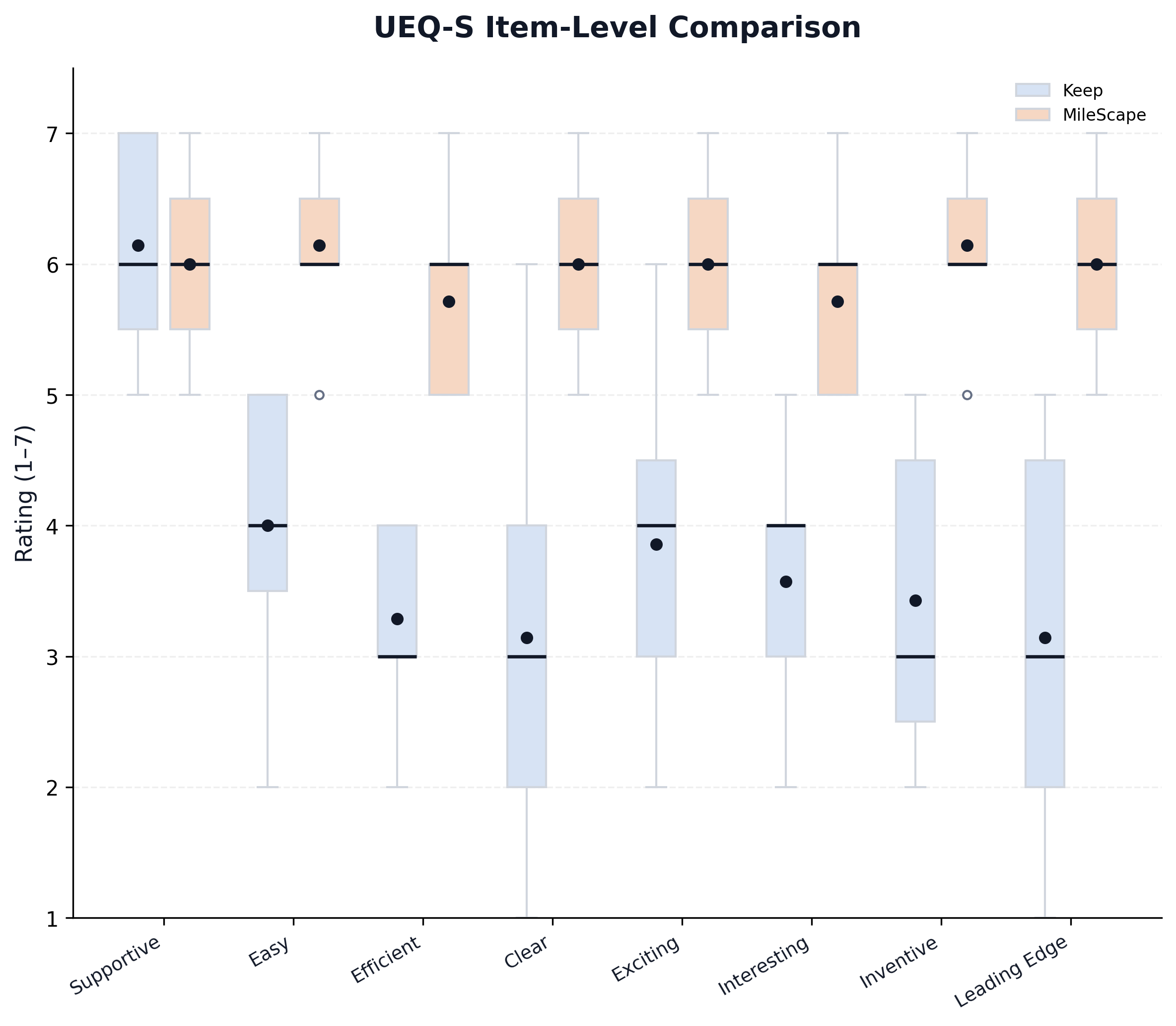
We conducted a small-scale comparative user study (n=7) to evaluate the user experience of MileScape and a mainstream fitness app (Keep).
A simplified version of the User Experience Questionnaire (UEQ-S) was used to assess usability and experience quality across 8 semantic differential scales, including ease of use, efficiency, clarity, excitement, and novelty.
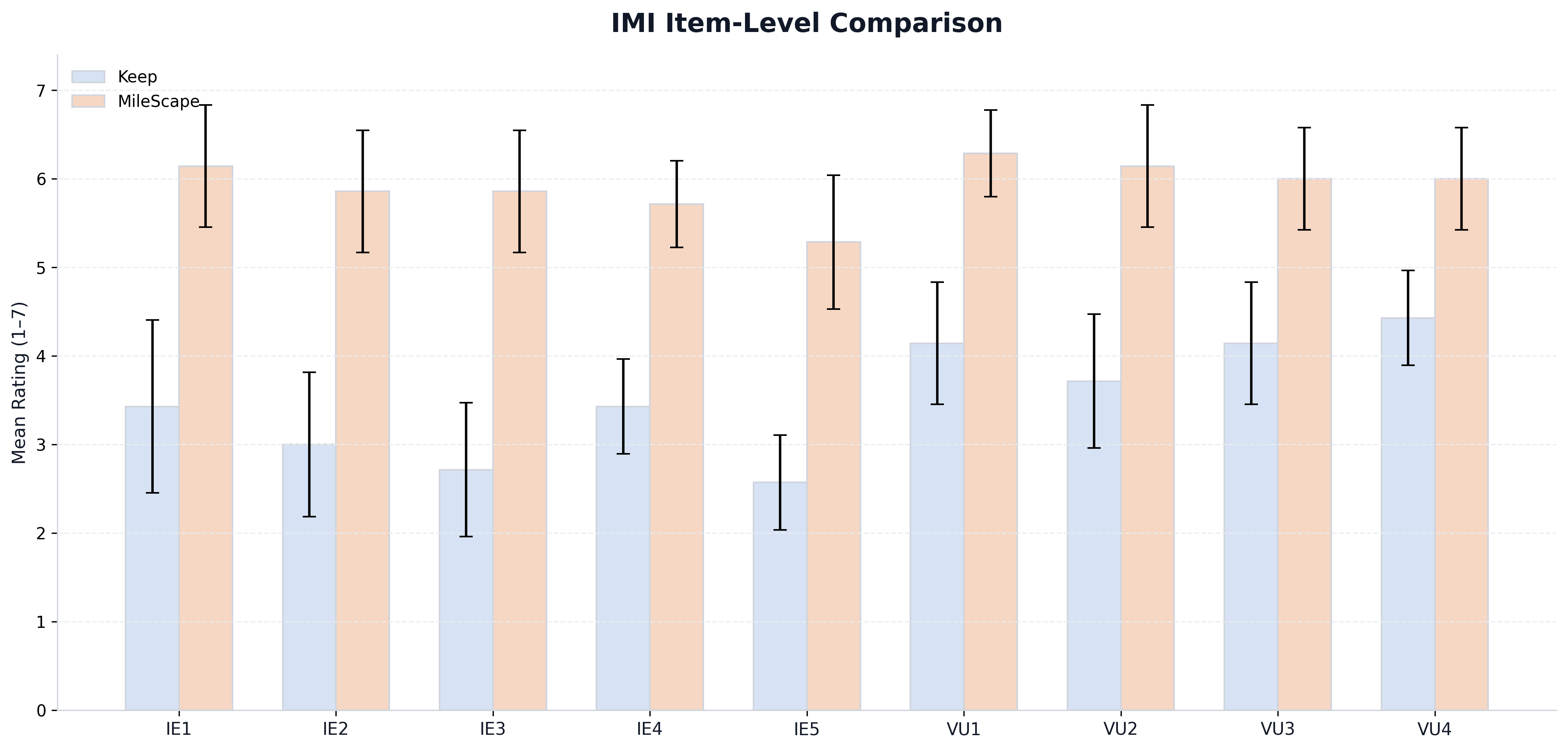
Additionally, inspired by the Intrinsic Motivation Inventory (IMI), we incorporated measures of interest/enjoyment and perceived value to better capture users’ motivation and long-term engagement.
MileScape consistently achieved higher scores than Keep across multiple dimensions, particularly in enjoyment, motivation, and novelty.
Although MileScape falls slightly behind Keep in terms of supportiveness, the gap is minimal. This demonstrates that MileScape has achieved comparable functionality with simple data presentation and a clean interface.
IMI-based results further indicate that users found MileScape more engaging and meaningful, suggesting stronger intrinsic motivation and perceived long-term value.
Academic sources and AI disclosure
AI-generated visual content used in this project is disclosed in the references below in accordance with university policy.
[1] Y. Bhargava and J. Nabi, "The opportunities, challenges and obligations of Fitness Data Analytics," Procedia Computer Science, vol. 167, pp. 1354–1362, 2020, doi: 10.1016/j.procs.2020.03.346.
[2] Natalie, "42 percent of users lose interest in fitness trackers after 6 months," Big Think, 2015. [Online]. Available: https://bigthink.com/ideafeed/users-lose-interest-in-fitness-trackers-after-6-months
[3] X. Yu and S. Wang, "Research on the Development Status, Problems and Countermeasures of Sports and Fitness APPs," Asian Journal of Social Pharmacy, vol. 20, no. 1, pp. 88–93, 2025.
[4] R. Rockmann and H. Gewald, "Individual fitness app use: The role of goal orientations and motivational affordances," in Proc. Americas Conf. on Information Systems (AMCIS), Cancun, Mexico, 2019. [Online]. Available: https://aisel.aisnet.org/amcis2019/healthcare_it/healthcare_it/3
[5] M. Schrepp, A. Hinderks, and J. Thomaschewski, "Design and Evaluation of a Short Version of the User Experience Questionnaire (UEQ-S)," International Journal of Interactive Multimedia and Artificial Intelligence, vol. 4, no. 6, pp. 103–108, 2017.
[6] Ryan, R. M. (1982). Control and information in the intrapersonal sphere: An extension of cognitive evaluation theory. Journal of Personality and Social Psychology, 43(3), 450–461.
[7] ByteDance Doubao, Seedream 4.5, accessed 5 April 2026. [Online]. Available: https://www.doubao.com. Applied to generate the conceptual hero image in the illustrative figure. Prompt: "Minimal abstract visualization of 70% runners and 30% organizers, contains two overlapping circles, clean Apple-style, flat design, soft shadows, no pie chart, no bar chart."